When Belonging Becomes Something to Prove: Erik Mohn on Transracial Adoption and Black Identity
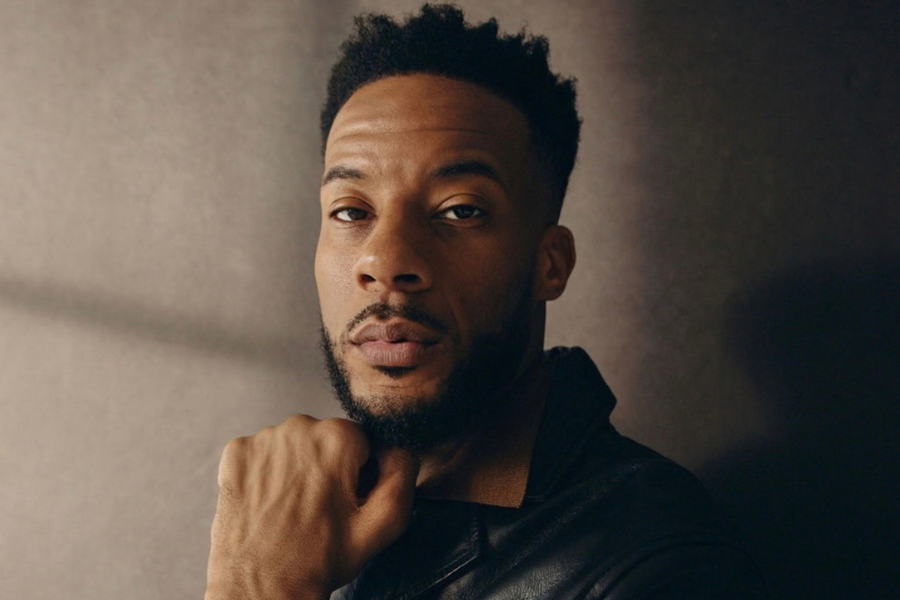
For most of his young life, Erik Mohn felt like he had to earn his Blackness. It took him years to realize the person he was trying hardest to convince was himself.
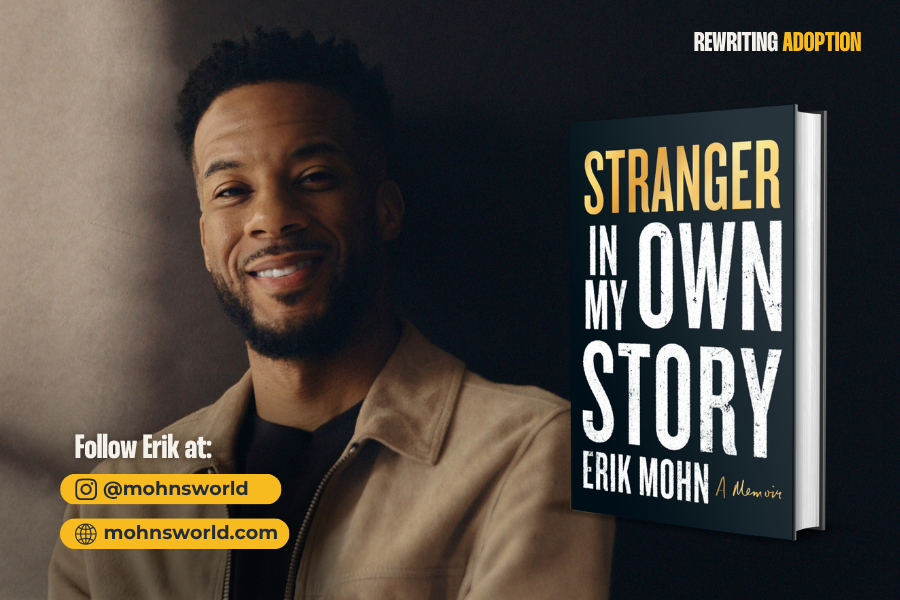
Erik is a writer, a transracial adoptee, and the author of Stranger in My Own Story, a new memoir about race, adoption, identity, family, and belonging. He was raised by white parents in Harvard, Massachusetts, with very few people around him who looked like him. From early on, he sensed his life would look different from the lives of the kids around him.
In this Spotlight, Erik reflects on the first time he connected Blackness with family, how hip-hop became his guide to Black manhood, the pressure he put on himself to prove he belonged, and the peace he has found on the other side of it.
Growing Up as a Transracial Adoptee in a Mostly White Town
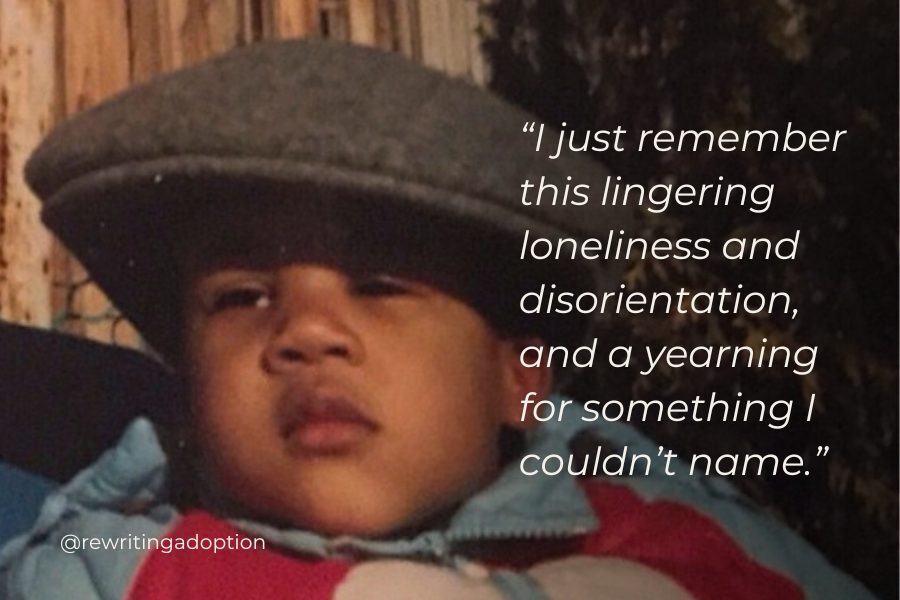
Erik’s first memory of noticing he was different, and trying to put it into words, comes from preschool. One day on the playground he spotted another Black kid and felt immediately drawn to him. He didn’t know why. He just knew he wanted to be near him. Later, he asked his mom a question that makes perfect sense through a child’s eyes: was that boy his brother?
She had to tell him no.
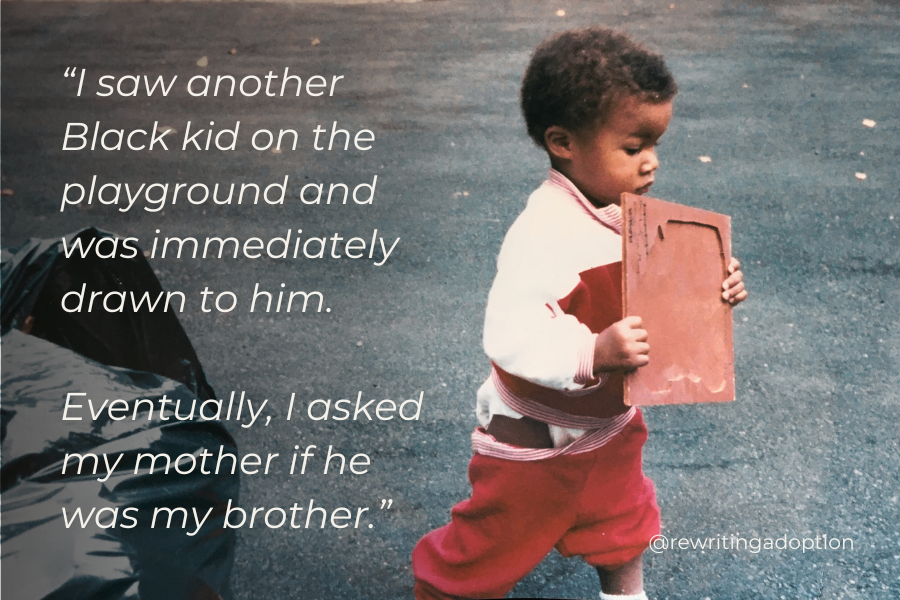
To a preschooler, it was a simple question. Looking back, Erik sees much more in it. “I think that was the first time I connected Blackness with family,” he says. At home, no one looked like him. A stranger on the playground was the closest thing to a reflection he had found, and his young mind was trying to understand.
“Looking back, I think that was the first time I connected Blackness with family.”
As a kid, Erik was happy and adventurous, but underneath that he carried a quiet sense that something was off. He could tell his life was going to look different from the lives of the white kids around him, who were being raised by their biological parents. He couldn’t explain why yet, and he didn’t have the words. What he had was a feeling that was hard to describe.
Many adopted people will recognize that feeling. The language for it often comes much later, sometimes decades later. For Erik, finding that language would become part of the work of his life, and eventually part of his book.
How Hip-Hop Became a Playbook for Black Manhood
Around age eleven, a neighbor introduced Erik to hip-hop. At first the music was just cool and interesting, but it quickly became something he needed.
Before then, he says, he could count on one hand the Black people he had ever spoken to, especially Black men. Rap changed that almost overnight. As Erik puts it, he suddenly had Black men on speed dial. Hip-hop opened a door into Black culture and gave him glimpses of Black lives and experiences that he otherwise had no way to reach.
As he moved into adolescence, the music started filling a deeper gap. Erik was eager for Black male leadership and guidance. There was no one in his family or town who could teach him how to be a Black man.
So he turned to the voices he had. What kept him listening was rappers speaking about the realities of Black life in America in a way he wasn’t hearing anywhere else, and Erik took it in like instruction. He wasn’t just listening for entertainment. He was listening for advice.
“I didn’t just listen to rap for entertainment. I listened for advice. Right or wrong, it gave me a playbook for Black manhood. No one in Harvard, Massachusetts was giving me that.”
Erik is honest that not everything in that playbook was good. He also holds onto what was. At its best, he says, rap is poetry with an incredible amount of wisdom in it. For a kid trying to understand himself with almost no one around who could show him the way, hip-hop became the foundation of his worldview and his consciousness as a young Black man.
“At the time,” he says, “it was all I had.”
Proving He Was “Black Enough”
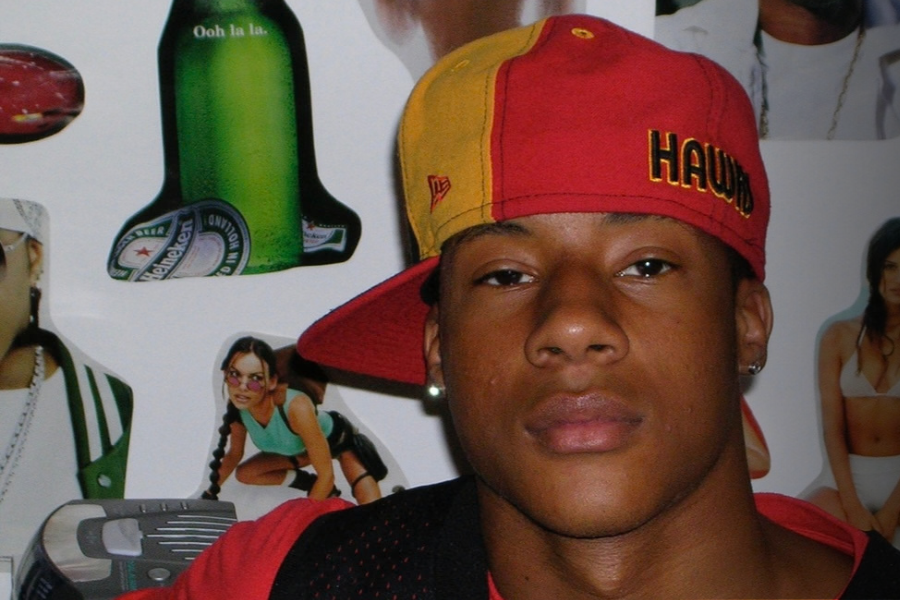
Growing up Erik felt constant pressure to prove he was Black enough. In his memoir, he examines that pressure and asks himself a question: “Proof for who? And for what?”
He has come back to that question many times over the years, partly because of the irony in it. Black people, he says, have always welcomed him with open arms. The rejection he feared mostly never came. As a teenager, though, the fear itself was enormous. Being seen as whitewashed or not Black enough was probably his biggest insecurity, and it shaped even ordinary moments.
When he and his parents walked around Boston and he saw Black people coming toward them, he would slow down and let his parents walk ahead, so no one would know the white couple in front of him were his parents. It’s a small moment, but it says a lot. A teenager was putting physical distance between himself and his own family, hoping to be seen as he wanted to be seen.
“I would slow down and let my parents get ahead of me so no one would know the white couple in front of me were my parents.”
Part of that pressure came from the distance between the life Erik was living and the Blackness he was learning about from the outside. Most of what he knew came from rappers, revolutionaries, books, television, and magazines. On one side, he was reading The Autobiography of Malcolm X and learning about Nelson Mandela. On the other, he was binge-watching BET, reading XXL and The Source, and keeping rap on repeat.
With almost no everyday Black people in his life to show him the full range of Black experience, his picture of what counted as authentic became very narrow. “As ridiculous as it sounds now,” he says, “I genuinely believed that to be authentically Black you either had to be a rapper or a revolutionary, because those were the models I had.”
He also carried shame about growing up financially privileged. Somewhere along the way he absorbed the idea that comfort and privilege made him less authentically Black, and that he had to make up for them. The gap between his life and the image of Blackness in his head felt huge, and he made it his mission to close it.
“I became obsessed with closing the distance between the life I had been given and the version of Blackness I thought I was supposed to embody.”
How Adoption Intensified the Need to Belong
When Erik looks underneath all of it, the playbook, the fear, the pressure to prove himself, he finds adoption.
“If I go deeper,” he says, “I think adoption intensified all of it.”
As a child, Erik understood being placed for adoption to mean that his biological mother didn’t want him. It’s a conclusion many adopted children reach on their own, often without anyone to help them make sense of it. Erik carried that belief into everything that came after. He already felt like damaged goods. The thought that Black people might not accept him either, that he could be turned away twice, felt unbearable.
For adopted people, the fear of rejection is rarely abstract. It often traces back to the first separation, the one we had no say in and couldn’t understand. When belonging feels fragile from the beginning, every new space can feel like a test you can’t afford to fail. For Erik, the stakes felt that high. He needed to belong somewhere, and he was willing to do almost anything to prove he was Black enough, even risk his life.
“I needed to belong somewhere.”
It’s a striking admission, and an honest look at how much was riding on a question most people never have to think about.
From Proving Himself to Self-Acceptance
With time, Erik came to see who had really been holding the measuring stick all along. The welcome he worried he would never get from Black people had been there the whole time. The doubt was coming from inside him.
“Looking back, I realize I was always the one questioning my Blackness. I was my harshest critic.”
Today, that pressure is gone. Erik says he doesn’t feel the need to prove his Blackness to anyone, Black people, white people, or himself. He is who he is.
“Today, I don’t feel the need to prove it to anyone, Black, white, or myself. I am who I am.”
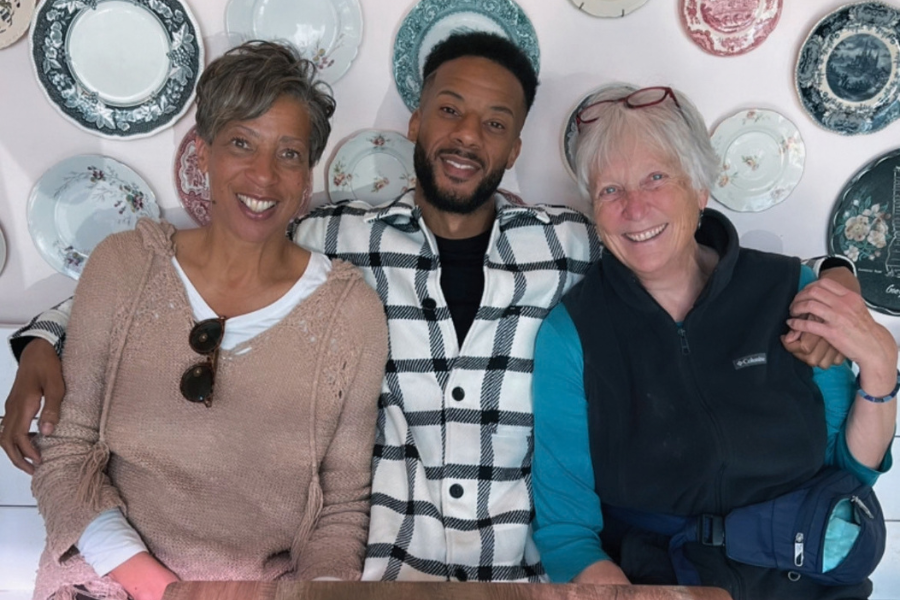
What has changed is what Blackness means to him. It used to be something to perform. Now it is something to honor. For Erik, Blackness today is about honoring a history of resilience, creativity, and love, and committing himself to the health and wealth of Black families and communities. Belonging is no longer a test he has given himself to pass.
What Erik Hopes Adopted People Take from Stranger in My Own Story
In Stranger in My Own Story, Erik goes much further into the questions that shaped his life: race, family, adoption, identity, belonging, and what it means to search for where you come from. When we asked what he hopes stays with adopted readers when they finish the book, he started with the simplest and most important thing.
You’re not crazy. The journey can be incredibly lonely, but you are not alone.
“The journey can be incredibly lonely, but you are not alone.”
Erik also hopes more adopted people feel empowered to tell their own stories. Adoptees, he says, have some of the most fascinating and complex stories he has ever heard, yet there is still very little understanding, and very little empathy, for what it means to be adopted.
He says transracial adoptees in particular live where many questions meet: race, family, identity, belonging, abandonment, love, and culture. And they are forced to face those questions very young. Who am I? Where do I come from? Where do I belong? What makes a family? What does it mean to be loved?
“Those may be adoptee questions,” Erik says, “but they’re also human questions.” He believes adopted people’s experiences hold lessons that reach far beyond adoption, lessons that can help people heal, understand themselves more deeply, and strengthen their relationships.
Above all, he wants adopted people to know they have the right to search for answers about their identity, ancestry, and biological family. He is honest that the search can be hard. It can complicate relationships and bring up things you weren’t prepared for. That doesn’t make the questions any less yours to ask.
“Those questions belong to you. No one should make you feel guilty for asking them.”
Whether you’re a transracial adoptee, an adoptive parent, or someone trying to understand how race and adoption shape a person’s sense of self, Erik’s story is an honest look at the difference between proving you belong and knowing you do. It’s also a reminder that the stories we’re handed about who we are can be rewritten.
Erik explores all of this and more in his memoir, Stranger in My Own Story.
You can learn more about Erik and his work at his website and follow along on Instagram @mohnsworld.