Connecting the Dots: Finding My Way Back to Peru Through Music
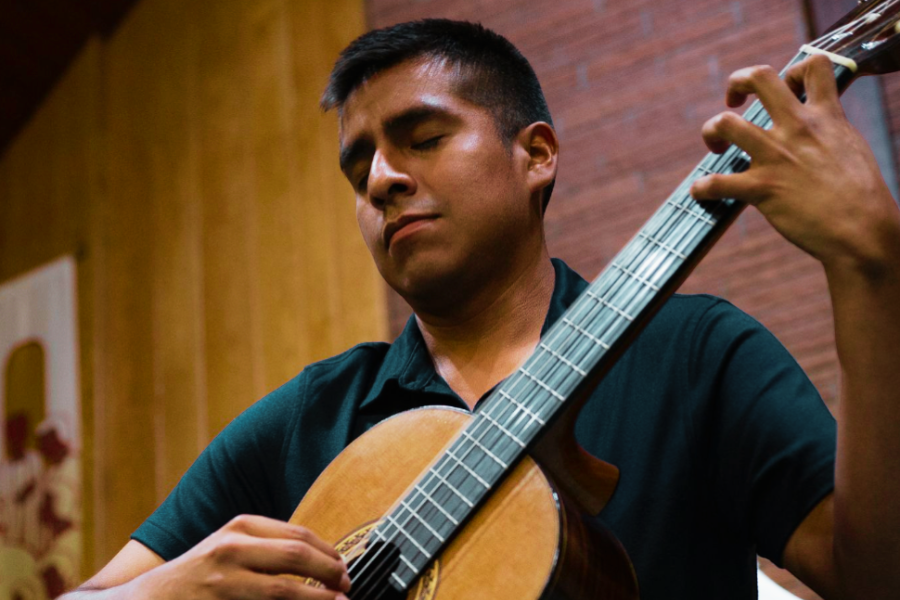
Born in Peru and adopted internationally, John Cesar has spent much of his life exploring the connection between music, culture, and identity.
A classical guitarist and educator, John has found that reconnecting with Peru wasn't defined by one moment, but by many small ones that slowly began to connect over time.
In this feature story, John reflects on the experiences that shaped his journey, from hearing legendary Peruvian guitarist Oscar Avilés perform for the first time to returning to Peru as both a musician and an adopted person. Through music, he discovered another way to understand and reconnect with his country of birth.
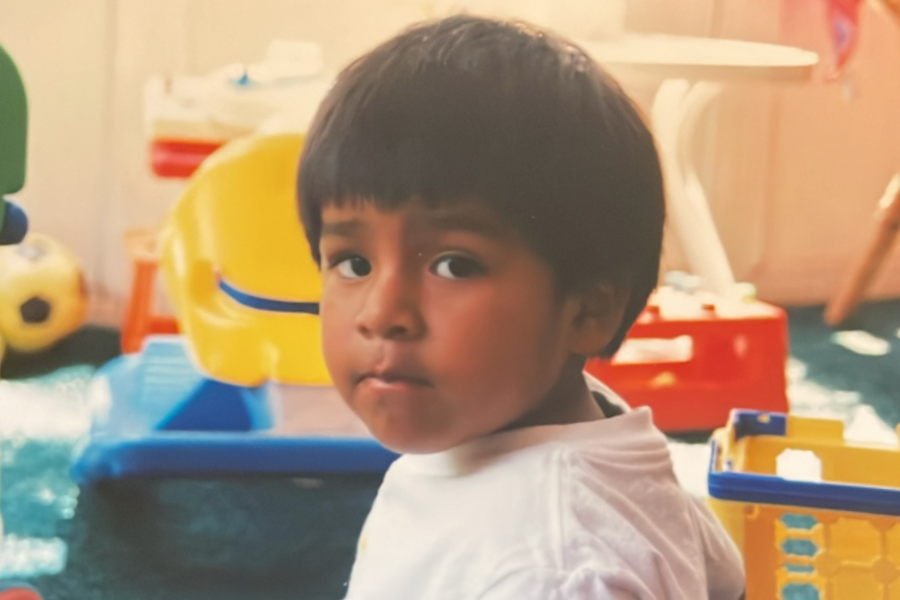
A Peruvian Identity He Was Proud Of, Before He Understood Why
John always knew two things growing up: that he was adopted, and that he was Peruvian. His parents made sure of the second one early, finding him a godfather from Peru so he'd always have someone from that culture in his life.
But knowing something and understanding it aren't the same thing, especially growing up in a mostly white, upper-class town where being Peruvian made him different by default.
"As a teenager, I think I felt more prideful about being Peruvian, but in a very misunderstood way," John says. "I was proud of being Peruvian without really knowing why I was, or why I felt that pride in the first place."
That pride showed up in small, almost improvised ways. He started looking things up on his own. He took friends to Peruvian restaurants and had them try the food he grew up with. Nothing dramatic. Just a teenager trying to build a bridge to somewhere he'd never been, using whatever materials he had on hand.
"I knew I wasn't going to understand it all, but I still didn't care. I wanted to do it anyway."
The Concert That Connected the Dots
For years, music and identity ran on separate tracks for John. He played guitar because he loved it, first electric, then classical after a teacher nudged him toward nylon strings.
Then his mom told him about a concert. A famous Peruvian guitarist, coming to Wayne, New Jersey. As a teenager, John didn't usually jump at things his parents suggested. This time was different.
That night, watching Oscar Avilés play, something shifted.
"It was the first time I was able to connect what I did with where I came from," John says. "I don't know if I was able to connect the dots at the time, but it was clear to me that the dots were there, and it was up to me if I wanted to take the next step and start connecting them."
It wasn't just that Avilés was a brilliant guitarist. It was that he was Peruvian, playing Peruvian music, on the same kind of instrument John had just started to fall for. For the first time, John could see the guitar, the country, and himself in the same frame.
"Everything that made somebody Peruvian, or at least what made me think of being Peruvian at the time, was all in one space."
He didn't leave that concert with everything figured out. He didn't have it all worked out yet, but he knew the pieces were there, waiting for him to put them together.
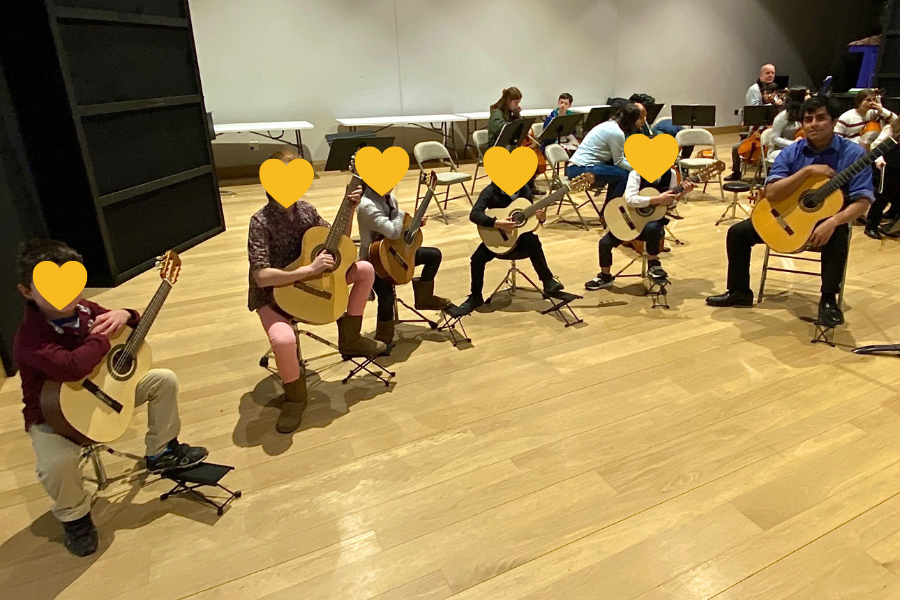
Finding Himself in the Music
That night in New Jersey opened a door for John. He started seeking out more Peruvian guitarists, more of those threads between his instrument and his birth country. And along the way, music became something more concrete: a place to actually find other people like him.
"I'm Peruvian, and I'm a guitarist. This person's Peruvian, and they're a guitarist too. We have something in common," John says, describing the guitar festivals where people would come up to him speaking Spanish, asking if he played traditional Peruvian music. Even among classical guitarists who never touched a folk repertoire, he found something shared beneath the surface.
Now that connection runs both directions. John doesn't just listen to Peruvian music anymore, he plays it, interprets it, and puts his own voice into it.
"Instead of simply introducing someone to Peruvian music, I'm the one creating it and sharing it. That feels much more personal to me, because it's a way of sharing something that I feel connected to and that represents the culture of Peru."
Watch John perform Leo Brouwer's "Danza Del Altiplano," recorded in 2018.
Coming Back to Where It Began
In 2015, John returned to the orphanage where he was adopted, this time as a performer.
It started with his mom. She reached out to the orphanage herself, introduced herself, and explained that the child they'd once cared for was now a classical guitarist. She asked if he could come back and play for them.
"At the time, I think what made it so meaningful was the idea that I was going to perform in Peru," John says. "But what really made it meaningful was going there and seeing how much they cared."
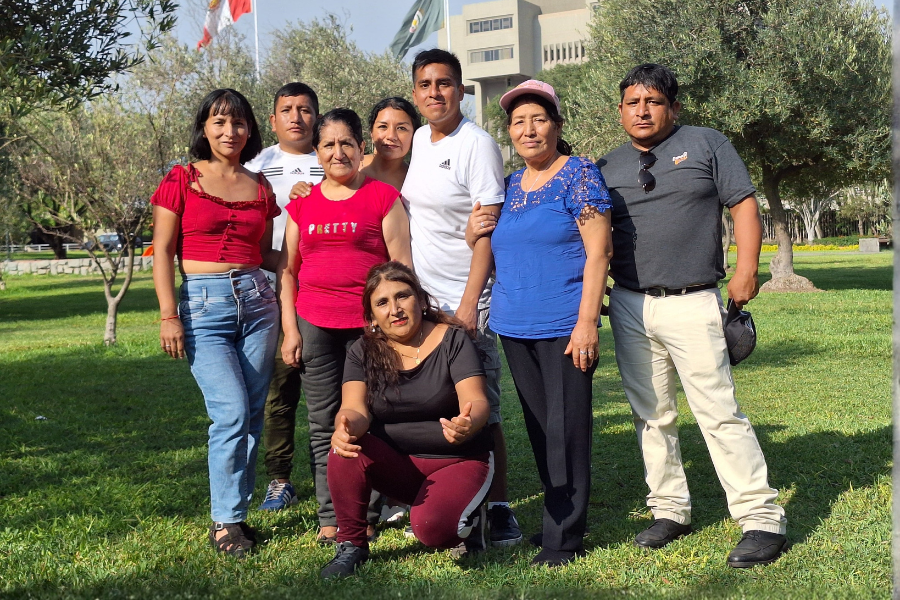
With his godfather's brother translating, John heard directly from the staff how much it meant that someone who had once lived there would come back. They told him they hoped every child there would go on to have a good, full life, and make the most of whatever came their way.
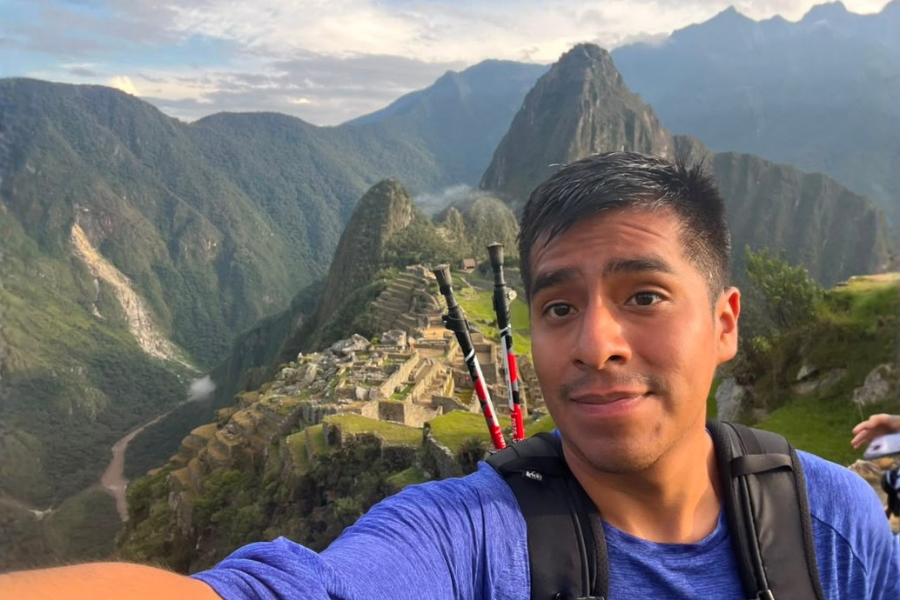
The orphanage held a small ceremony. Children performed traditional Peruvian dances, kids who looked to be somewhere between six and twelve years old.
"Thinking back on it now as an adult and as an adopted person, is pretty tough to think about," John says.
Afterward, walking through the building, his dad started remembering things out loud. They came to an open play area, and his father stopped.
"This was the first place we met you. I remember we walked in here, and then they walked you out from across the hall."
John doesn't remember that day himself. But hearing how clearly it had stayed with his parents, more than two decades later, was its own kind of homecoming.
Advice for Anyone Still Finding Their Way Back
Looking back on everything, from the concert in New Jersey to the orphanage in Peru, John's advice for other adopted people isn't about having a plan. It's about not needing one.
"Go step by step. Take it piece by piece, and don't feel like you owe it to yourself or to anyone else to learn it all at once," he says.
He compares it to learning to swim. Dive into the deep end before you're ready, and you'll either sink or climb out too overwhelmed to try again. Instead, he suggests picking one thing, a song, a dish, a word, and sitting with it for as long as it takes.
"Find one thing that you want to reconnect with and start there. Whether it's music, food, history, clothing, beliefs, or culture, do it one thing at a time. There are people and resources out there, and you don't have to do it alone."
And if it gets to be too much, that's allowed too.
"Try to find something that connects one thing to another, from point A to point B, or maybe even just from A to A1. Don't try to go from A to B all at once. Go little by little until you feel comfortable, and then slowly connect another dot."
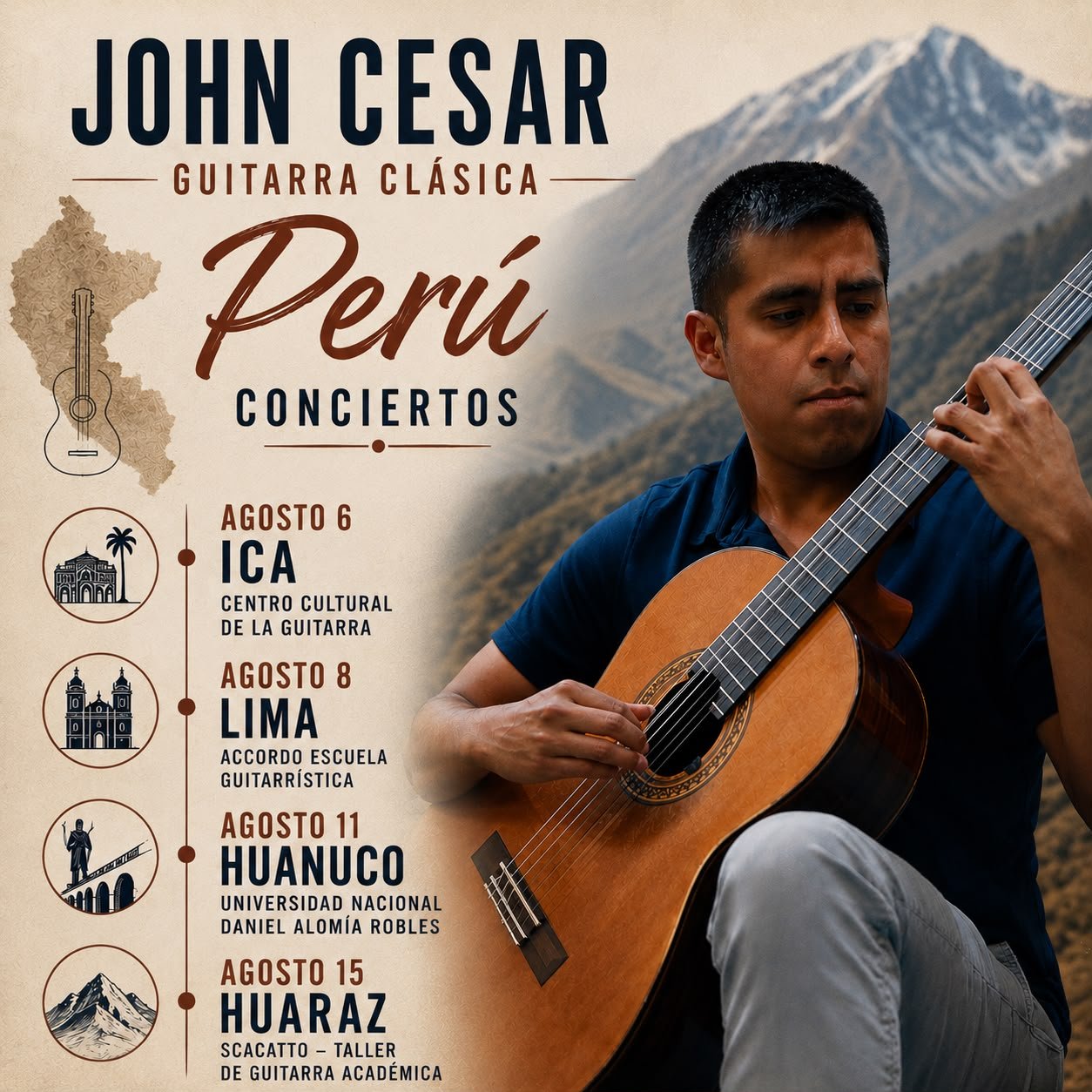
This August, John returns to Peru, performing concerts and leading masterclasses in Lima, Huánuco, Huaraz, and Ica.
Follow along with his work on Instagram @johncesarguitar and YouTube @Fortheclassicalguitarist.