Nothing About Us Without Us: Dr. Abby Hasberry and the Adoption Narrative Shift Docuseries
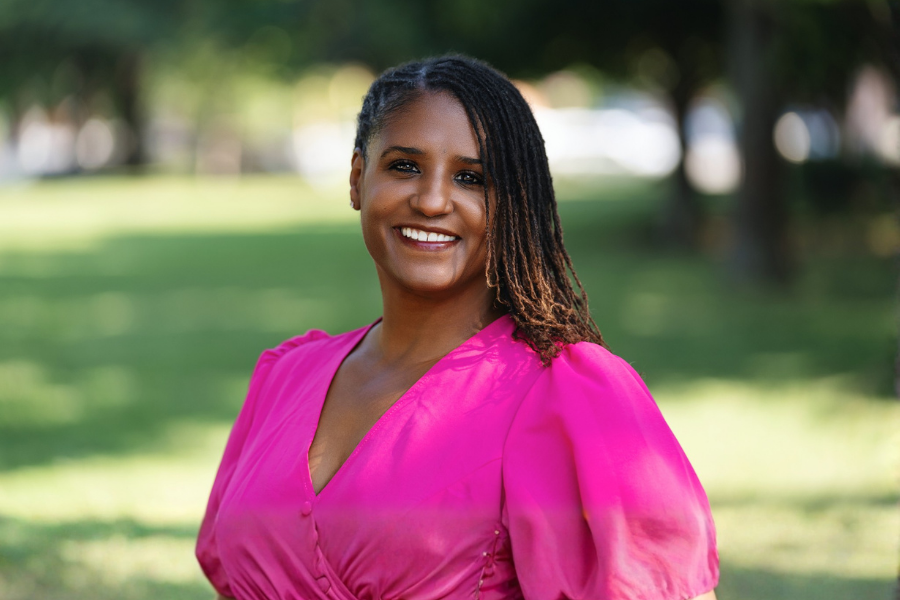
For a long time, Dr. Abby Hasberry accepted the adoption story she was given. It took her decades to see how much it left out, and that no one had ever asked her to tell it herself.
Abby is an adopted person, a birth mother, a therapist, an executive leadership coach, and an author. She has spent years exploring adoption through her own lived experience and through her work with people across the adoption constellation: adopted people, birth families, and adoptive families. Now she is creating Adoption Narrative Shift, an 11-episode documentary series in production that gives adopted people, birth parents, and affected family members the space to tell their stories in their own words.
In this Spotlight, Abby talks about experiencing adoption from more than one side, who has shaped the adoption narrative until now, the first day of filming, and what the series needs to keep moving forward.
Living Adoption From More Than One Seat at the Table
Abby knows adoption from two perspectives not many experience at once. She was adopted, and she later became a birth mother. Both experiences taught her the same thing: what it means to have the most important story of your life narrated by other people.
“I have lived adoption from more than one seat at the table.”
For years, she believed the narrative she was given. She was lucky. She was chosen. Relinquishment was simply an act of selfless love. She was brave, and she should be grateful. Many adopted people will recognize that script, because most of us were handed some version of it too.
It took Abby decades to see what that version left out. Three parts of her life brought it into focus: writing her memoir, holding space as a therapist for people across the adoption constellation, and, most recently, petitioning the court for her original birth certificate and adoption records. Through all of it she realized she wasn’t the only one holding onto a story someone else had written.
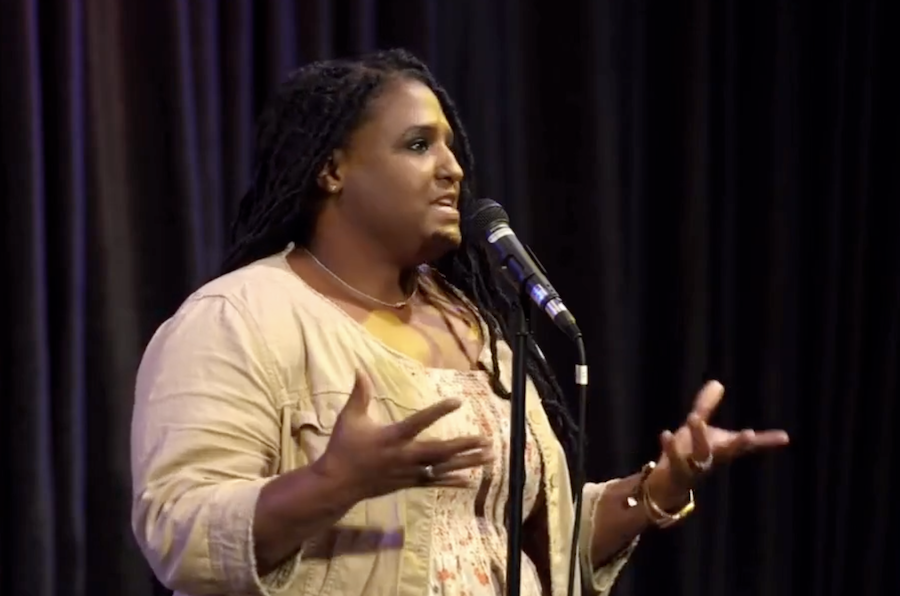
That’s when telling this story stopped feeling like a project to her. It became something she felt she owed to the adoption constellation.
Her questions didn’t stop with her own story, either. Abby’s recent research looks at the experiences of adopted women who later relinquished children to adoption, including experiences of pressure and coercion.
Who Gets to Shape the Adoption Narrative?
Abby has said that for too long, adoption stories have been shaped by everyone except the people who actually live them. When we asked what changes once adopted people can tell their own stories, her answer was simple: everything.
She points out that the traditional adoption narrative was built by almost everyone except adopted people. That includes the agencies, attorneys, social workers, therapists, and medical professionals who facilitate adoptions, and the families who adopt. These are the people with the power to decide how the story got told. In her view, that story was also built with capitalism, not humanitarianism, at its core.
“In adoption, those with privilege have always shaped the narrative, while those without it live with the consequences.”
When adopted people speak for themselves, Abby says, the story stops being tidy and becomes truer. It makes room for grief and gratitude in the same breath. It lets us love our families and still mourn what we lost. And it lets us say plainly that being wanted and being relinquished are two sides of one experience.
“When adopted people finally speak in our own words, that story stops being tidy, and it becomes truer.”
Adoption Narrative Shift: An Adoptee-Led Documentary Series
The series makes one promise: Nothing About Us Without Us. That belief is far more than a tagline to Abby, it’s the whole point and the foundation of her documentary series.
Across 11 episodes, the series centers adopted people, birth parents, and affected family members. These are the people who live with the consequences of adoption, and they have rarely been the ones telling the story. Giving them room to speak, Abby says, is how the adoption community finally closes the gap between the people who shape the narrative and the people who live it.
A Sibling Reunion on the First Day of Filming
Abby didn’t have to wait long to see why the series matters. It became clear on the very first day of production.
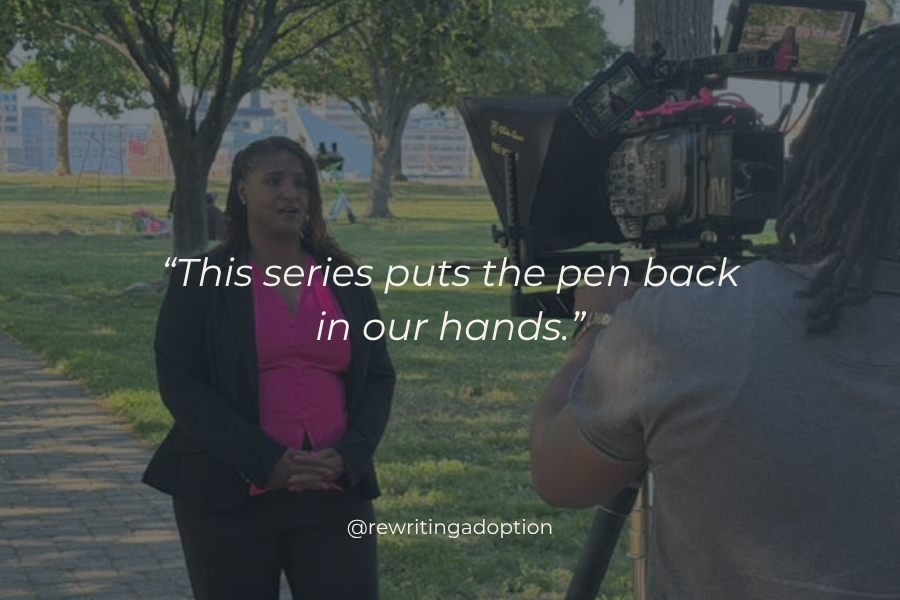
The crew filmed a reunion of her paternal biological siblings in Baltimore, with ten of the eleven siblings together. Abby listened as the people adoption had separated her from processed their experiences on camera, together. In that moment, she says, she understood in her body why the series has to exist.
These are the moments the traditional adoption narrative leaves out. It shows the placement and calls it a happy ending. It doesn’t show the siblings, the decades spent apart, or the reunion that adoption made necessary in the first place.
“These are the moments the traditional narrative never shows you.”
Standing in that room, Abby thought: this is the story, and no one has been letting us tell it.
How You Can Help Keep the Cameras Rolling
Adoption Narrative Shift is still in the process of being made, and Abby shares what it needs for her to complete it. It needs what every independent documentary needs: funding, and people who believe in it.
The series is fiscally sponsored through Charm City Impact, a confirmed Maryland-based 501(c)(3) fiscal sponsor. Every episode means travel, crew, editing, and unhurried time with people whose stories deserve to be told with real care.
Abby will be running a crowdfunding campaign with giving levels that start at ten dollars. She chose that approach on purpose, because she wants the series to belong to the community.
“I want this series to belong to the community rather than to a handful of large funders.”
Support can be a one-time gift, a monthly pledge, or simply sharing the campaign with people who care about adopted people and first families. Every bit of it helps the crew keep filming, and helps make sure these stories are told by the people who actually lived them.
Whether you’re an adopted person, a birth parent, a family member, or someone who wants to understand adoption in a more honest and realistic way, Abby’s work is an invitation to listen to the people who live it. It’s also a reminder that the adoption story is ours to rewrite.
Learn more about the series and support the project at the Adoption Narrative Shift website.
Follow Abby on Instagram @d.e.a.r._abby and on Facebook @dr.abby.hasberry.